
use case
External Vulnerability Scanner
Perform an external vulnerability scan of IP addresses and domains


what it is
What is an external vulnerability scanner?
An external vulnerability scanner is software which tests public-facing assets, such as public internet IP addresses and domains, for security vulnerabilities. An operator gives the scanner a list of targets and the scanner performs the following steps:
Discovery:
In this phase the scanner makes ping requests and conducts port scans to determine which targets are responding and what ports are open on each target.
Service detection:
Now that the scanner knows what targets and ports are responding, it attempts to determine the actual services that are running. For example: is the target running SSH, SNMP, Apache web server, phpMyAdmin, etc. To do this, the scanner uses information about commonly used port numbers combined with fingerprinting techniques to verify the service. In many cases, the scanner can even detect the exact software version numbers.
Vulnerability assessment:
Finally, the scanner compiles a list of specific vulnerabilities. In some cases this is as simple as checking the software version numbers that were gathered in the service detection phase against known lists of vulnerabilities, such as the CVE database. In other cases, the scanner makes additional requests to test for the vulnerability, such as testing for unsecured applications or applications using default passwords.
how it works
How to perform a high-quality external vulnerability scan?
There are several important things to be aware of when running an external vulnerability scan. Keeping these in mind will help you achieve significantly better scan results.
Collect all of your targets:
This may seem like a simple step, and it is for some organizations who have a small public-facing attack surface area. However, for more complex organizations it's easy to miss an IP address, domain name, or even an entire CIDR block. Anything that is missed won't be scanned.
Alive check settings:
To optimize speed, some scanners will first send a ping request to each target and skip targets which do not respond. This is a check to see if the target is "alive" or "up" and it can save considerable time for very large address spaces. However, in many situations it is better to be thorough and scan anyway as not all targets may respond to ping. Most scanners allow this optimization to be disabled.
Update the scanner:
New vulnerabilities are discovered daily. Most scanners have a feed or database of vulnerability definitions, which should be updated before scanning to ensure that the latest known security issues are checked.
- Average cost savings / year using HostedScan vs the best alternative products
- $3,850 USD

- Average time savings / year using HostedScan vs a do-it-yourself solution
- 438 hours
External vulnerability scanning tools
There are several good external vulnerability scanning tools available. Here at HostedScan, we of course recommend our own external vulnerability scanning service. It's transparently powered by open-source tools that are used daily by millions of cybersecurity professionals and we truly believe that it delivers best-in-class quality at a much lower price than the alternatives.
However, we fully understand if you want to shop around. Some other commonly used commercial offerings are the external vulnerability scans from Qualys, Tenable's Nessus, and Rapid Fire Tools. Alternatively, you can run open source tools yourself, such as OpenVAS/GVM, Nmap, and Nuclei.
Benefits of using HostedScan
Strengthen your
cybersecurity
resilience
Strengthen your cybersecurity resilience
Strengthen your
cybersecurity
resilience
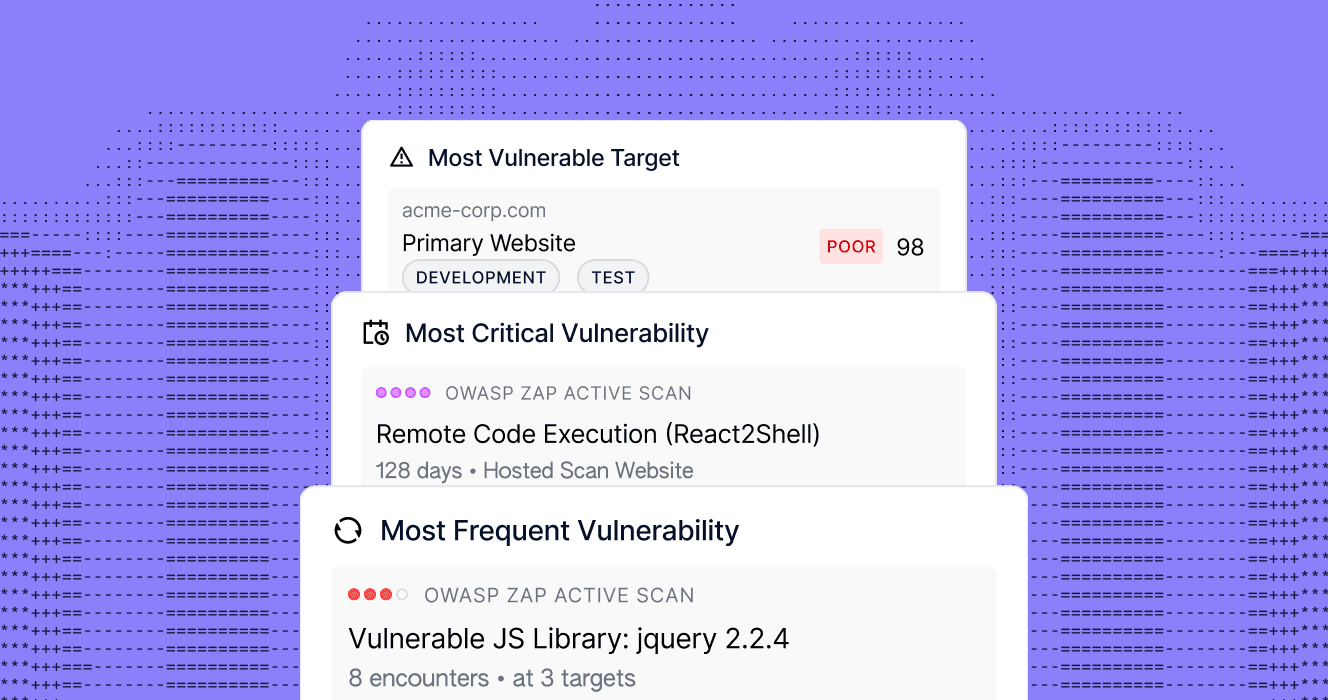
Mitigate security vulnerabilities
Discover CVEs, OWASP Top 10 vulnerabilities, and exploitable weaknesses across your entire infrastructure. Get prioritized remediation guidance with CVSS scoring and actionable risk classifications. Fix what matters first.
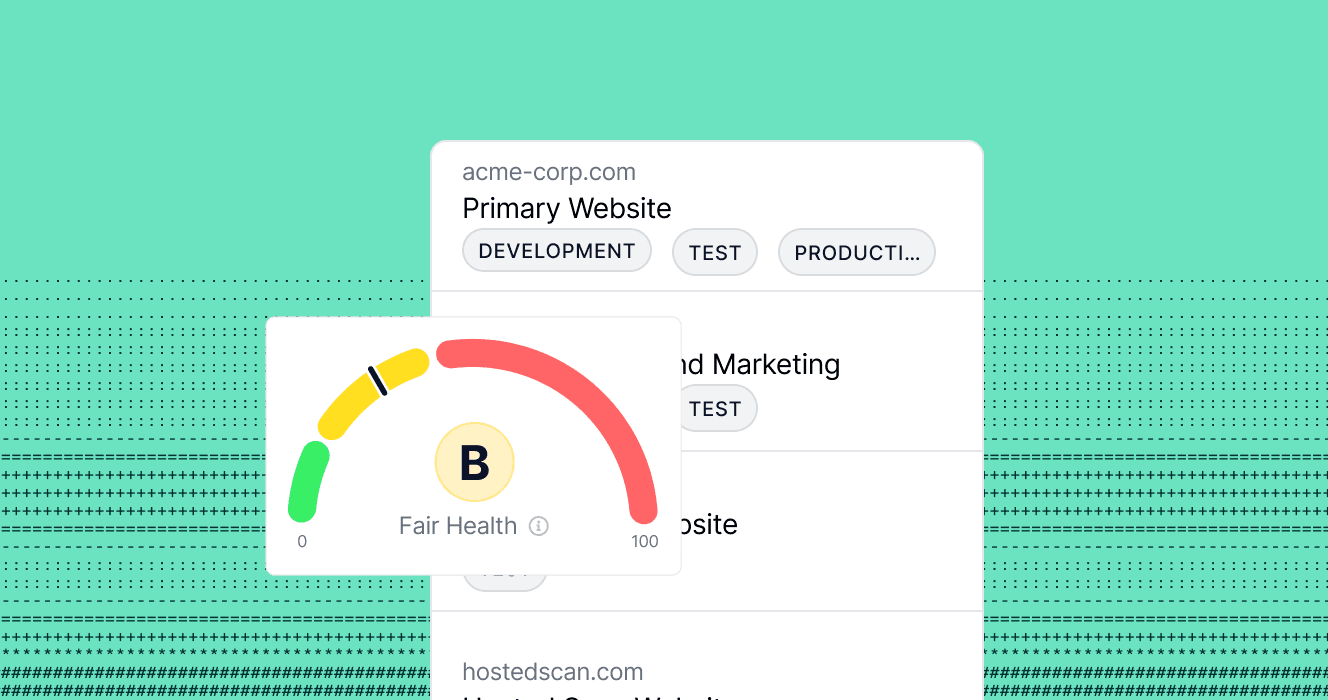
Manage your risk exposure
With regulations such as GDPR and CCPA, failure to maintain reasonable security procedures is grounds for lawsuits and fines.
Meet compliance requirements
Vulnerability scanning is essential for your compliance with SOC 2, ISO 27001, cyber insurance, and more.
Detect misconfigurations
90% of cyber attacks exploit simple misconfigurations, not zero-days. Detect exposed ports, weak credentials, outdated software, and common security gaps before attackers do: automatically, every day.
Map your attack surface
Your infrastructure changes constantly. Automatically discover and monitor all websites, servers, networks, and APIs, maintaining complete visibility of your attack surface without manual tracking.
14 days free. No credit card required.
See a sample reportOur Customers
5,000+ MSPs and IT teams who move faster













Speed and power,
without the complexity
The world's leading vulnerability scanners, all in one platform.